Epoxy Versus Polyaspartic Concrete Coating: The Ultimate Guide to Choosing the Best Garage Floor Solution
Garage floors face heavy wear from vehicles, chemicals, and changing weather, so choosing the right concrete coating matters for durability, appearance, and downtime. This guide explains what epoxy and polyaspartic concrete coatings are, how each system bonds with concrete, and which performance attributes—durability, UV stability, chemical resistance, cure time, and cost—drive the right choice for residential and commercial garages. Readers will learn practical trade-offs, installation realities, and specific use cases where one coating outperforms the other, plus decision support to match coatings to needs. The article also outlines professional installation steps, typical cost drivers, financing considerations, and common questions buyers ask before committing to a garage floor upgrade. Throughout we use industry keywords like concrete resurfacing, epoxy flooring, polyaspartic top coat, and long-lasting garage floor solution to help you evaluate options and plan your project with confidence.
What Are Epoxy and Polyaspartic Concrete Coatings?
Epoxy and polyaspartic are two polymer-based concrete coatings that protect and beautify garage floors by forming a bonded, resilient surface over prepared concrete. Epoxy is a thermosetting resin formed by mixing a resin and a hardener to create a chemically cross-linked layer that adheres strongly to properly profiled concrete. Polyaspartic is a fast-curing derivative of the polyurea family that forms a flexible, UV-stable top layer often used as a sealer or topcoat. Both systems require surface preparation, adhesion promotion, and moisture control, but their chemistry and cure kinetics produce different return-to-service windows and outdoor suitability. Understanding these basic material distinctions helps homeowners and contractors choose a system aligned with timeline, budget, and environmental exposure.
What Is Epoxy Concrete Coating?
Epoxy concrete coating is a polymer system created when an epoxy resin reacts with a curing agent, producing a durable, adhesive film on concrete that resists many chemicals and abrasion. Epoxy systems vary from single-component waterborne primers to multi-part high-solids formulations used for flake broadcast decorative floors in garages and light commercial settings. Epoxy’s molecular cross-linking imparts high hardness and excellent adhesion to prepared concrete, making it ideal for indoor garage spaces and decorative flake or metallic finishes. The trade-off is that many epoxies cure more slowly and can yellow under prolonged UV exposure unless a UV-stable topcoat is applied.
What Is Polyaspartic Concrete Coating?
Polyaspartic concrete coating is a rapid-curing polyurea-derived coating formulated to deliver fast return-to-service times, strong chemical resistance, and improved UV stability compared with standard epoxy. Polyaspartic systems are commonly used as topcoats over decorative systems or as stand-alone coatings for garages, patios, and commercial floors where quick turnaround and color retention are priorities. The chemistry yields a flexible film that resists cracking from minor slab movement and has superior resistance to yellowing in outdoor or sunlit environments. Because polyaspartic cures quickly, it requires experienced crews and controlled conditions during application for consistent results.
Research into polyaspartic ester polyurea concrete coatings highlights their development for improved impermeability and crack resistance.
Polyaspartic Ester Polyurea Concrete Coating: Formula and Application
Its of great importance to develop various outstanding protective concrete coating with favorable impermeability and crack-resistance properties. In this study, the polyaspartic ester polyurea was prepared, and its adhesion to concrete was evaluated by universal testing machine and SEM technology. The optimal formula of polyurea was obtained by investigating the effects of each component’s content on the bonding strength to concrete and the water contact angle. Subsequently, the mechanical and surface properties of these polyurea coating were tested. The results showed that the polyurea was obtained by the following formula: the weight ratio of A1/A2/B was 0.612/ 0.408/ 1, and the fluoride filler content was 3%. The coating exhibited excellent mechanical properties, such as high bonding strength (4.5 MPa), sufficient tensile strength (16.4 MPa) and elongation at break (456%). Meanwhile, the coating showed a hydrophobic surface with its water contact angle of 105°. Hence,
Research on the formula of polyaspartic ester polyurea concrete coating and its application, L Chen, 2013
How Do Epoxy and Polyaspartic Coatings Relate to Concrete Floors?
Both epoxy and polyaspartic coatings rely on mechanical and chemical bonding to a profiled concrete substrate, so surface preparation—diamond grinding, shot blasting, and moisture testing—is essential for long-term adhesion and performance. Moisture vapor transmission, slab cracks, and contaminants such as oils must be addressed before coating to prevent adhesion failure or bubbling. Epoxy typically tolerates slower, more methodical application windows that can be forgiving for patching and flake broadcasts, while polyaspartic’s short pot life demands quick work flow and tight scheduling. Choosing the right primer, repair materials, and topcoat strategy ensures the selected polymer coating functions as intended on indoor and outdoor concrete floors.
What Are the Key Benefits and Drawbacks of Epoxy and Polyaspartic Coatings?
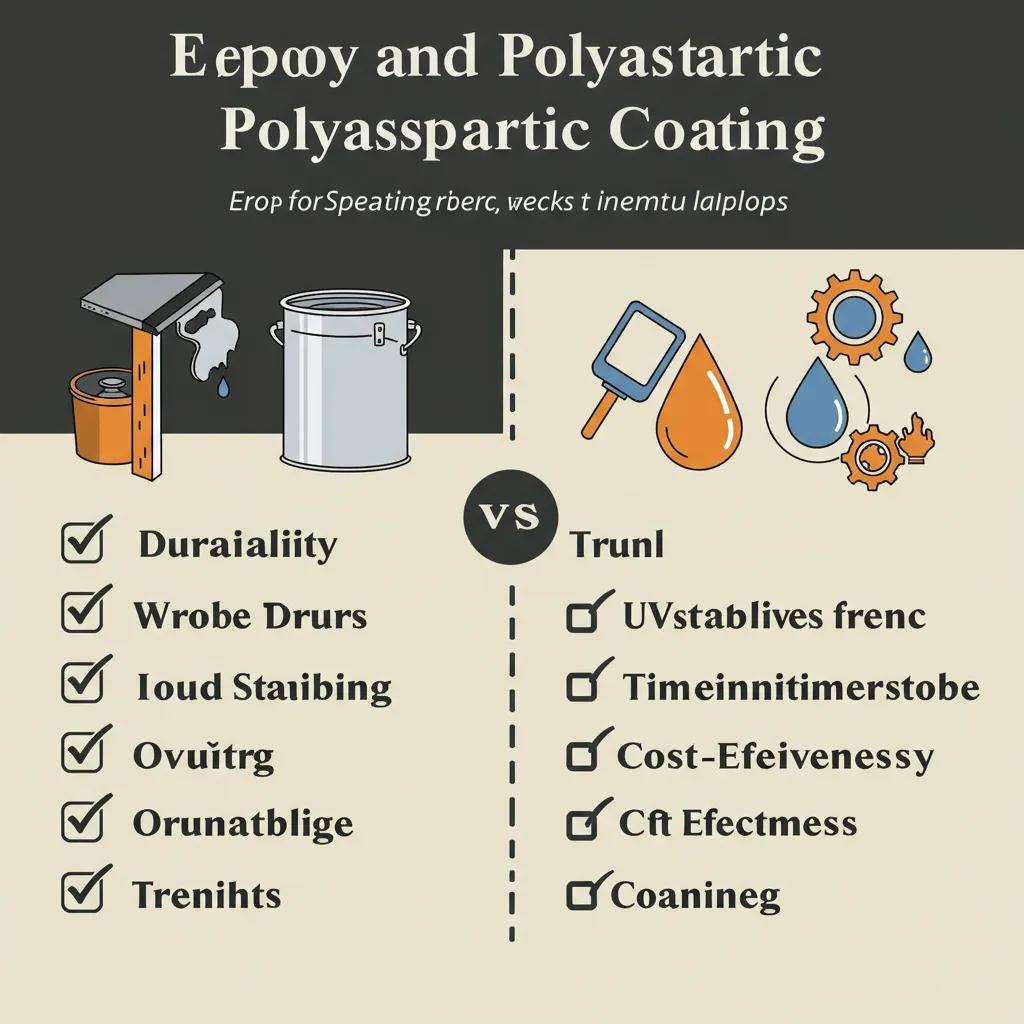
This section summarizes the principal advantages and limitations of epoxy and polyaspartic coatings to help you weigh trade-offs for garage and light commercial floors. Epoxy delivers strong adhesion and cost-effectiveness for decorative systems, whereas polyaspartic emphasizes speed and UV stability for exterior exposure and quick-turn projects. Understanding the pros and cons clarifies when each system provides the best value and which performance attributes to prioritize for a given site. Below are lists that make the comparison easy to scan and apply to real-world scenarios.
Epoxy garage floor coatings offer several primary advantages:
- Epoxy coatings provide strong adhesion to well-prepared concrete and form a hard, wear-resistant surface.
- Epoxy systems offer good chemical and stain resistance against oils, gasoline, and household cleaners when properly cured.
- Epoxy floor systems are generally more cost-effective upfront, especially for decorative flake installations and primer/basecoat approaches.
These advantages make epoxy a common choice for budget-aware residential projects; the following summary notes where caution is needed before selecting epoxy.
Epoxy drawbacks and limitations include these common issues:
- Epoxy typically requires longer cure times, increasing downtime before foot and vehicle traffic can resume.
- Many epoxy formulations are susceptible to UV yellowing and color shift if used outdoors without UV-stable topcoats.
- Epoxy can be more rigid and may crack if the concrete substrate moves or has unresolved hairline fractures.
Recognizing these drawbacks helps determine whether epoxy’s lower upfront cost aligns with your long-term performance needs.
Polyaspartic coatings deliver key benefits that suit fast, high-performance projects:
- Polyaspartic coatings cure quickly, allowing light foot traffic and vehicle return within hours in many formulations.
- Polyaspartic offers excellent UV stability and color retention, reducing yellowing risk for sun-exposed garages or outdoor concrete.
- Polyaspartic systems tend to be more flexible and impact resistant, tolerating minor slab movement better than rigid epoxies.
These benefits make polyaspartic attractive for commercial projects and outdoor-exposed residential garages, though consideration of price and installer skill is necessary.
Polyaspartic drawbacks to consider include:
- Polyaspartic materials and installation can incur higher upfront costs compared with standard epoxy systems.
- Short pot life and fast reaction time require experienced installers and coordinated crews to achieve consistent spreads and finishes.
- Availability of certain polyaspartic formulations or decorative options may be more limited than epoxy flake systems in some regions.
These trade-offs guide whether a higher initial investment in polyaspartic is justified by faster service and reduced UV maintenance.
How Do Epoxy and Polyaspartic Coatings Compare in Durability and Performance?
Epoxy and polyaspartic coatings differ in abrasion resistance, UV stability, chemical resistance, and flexibility, which together determine real-world durability for garage floors. Abrasion resistance and lifespan depend on system thickness, topcoat selection, and traffic patterns, while UV exposure and chemical spills determine long-term aesthetic and functional outcomes. Below is an EAV-style comparison table that highlights core performance attributes to aid quick decision-making for homeowners and facility managers.
The following table compares core performance attributes of epoxy and polyaspartic coatings:
| Coating Type | Attribute | Typical Performance |
|---|---|---|
| Epoxy | Cure Time | Slower cure; 24–72+ hours to light use |
| Polyaspartic | Cure Time | Fast cure; 1–6 hours to light use |
| Epoxy | UV Stability | Prone to yellowing without UV topcoat |
| Polyaspartic | UV Stability | Excellent color retention and UV resistance |
| Epoxy | Flexibility | More rigid; less tolerant of slab movement |
| Polyaspartic | Flexibility | More flexible; better impact tolerance |
Which Coating Offers Better Durability and Wear Resistance?
Durability and abrasion resistance depend on resin chemistry, film thickness, and topcoat selection; epoxy systems often provide excellent hardness and long-term wear when applied thickly and maintained properly. Epoxy’s rigid, cross-linked structure resists abrasion from tires and tools, making it suitable for high-wear indoor garages and light industrial floors. Polyaspartic systems can match or exceed epoxy abrasion resistance in many formulations while adding flexibility, which reduces cracking risk on imperfect slabs. Maintenance practices, such as routine cleaning and timely repair of chips, significantly influence lifespan for both systems and should factor into coating selection.
How Do Epoxy and Polyaspartic Coatings Perform Against UV Exposure and Yellowing?
Polyaspartic coatings generally resist yellowing and color shift far better than many standard epoxy systems, which can discolor under direct sunlight unless sealed with a UV-stable topcoat. Epoxy’s susceptibility to UV degradation can be mitigated by applying a UV-stable urethane or aliphatic topcoat, though that adds cost and application steps. Polyaspartic’s built-in UV stability simplifies long-term color retention for sunlit garages, exterior patios, and bays with natural light exposure. For projects where appearance and colorfastness are priorities, polyaspartic reduces future maintenance compared with untreated epoxy.
What Are the Differences in Chemical and Stain Resistance?
Both epoxy and polyaspartic coatings resist oils, gasoline, brake fluid, and many household chemicals better than uncoated concrete, but specific formulations vary in chemical compatibility. Epoxy films are chemically resistant when fully cured and thicker; however, prolonged exposure to strong solvents can damage some epoxy variants. Polyaspartic coatings frequently exhibit equal or superior chemical resistance at thinner mil thicknesses, providing easier cleanup and longer-term stain resistance for spilled automotive fluids. Regular cleaning and prompt spill management extend both coatings’ service life and preserve appearance.
How Do Flexibility and Impact Resistance Differ Between the Two Coatings?
Epoxy tends to be more rigid and can crack if the underlying slab shifts, settles, or develops hairline fractures; polyaspartic coatings generally offer greater flexibility and improved impact resistance for dropped tools and dynamic loads. Slab condition assessment and crack repair are critical before applying either system, but polyaspartic’s flexibility can better tolerate minor substrate movement without delamination. For garages with known slab movement or for commercial bays subject to heavy impact, polyaspartic may reduce repair frequency compared with rigid epoxy systems.
What Are the Differences in Cure Time, Application, and Cost Between Epoxy and Polyaspartic?
Practical differences—cure time, application workflow, and cost—often determine the best choice between epoxy and polyaspartic for a given project. Fast cure and quick return-to-service favor polyaspartic for tight schedules, while epoxy’s longer working time can suit decorative broadcasts and projects with complex detailing. Below is a table that compares installation complexity, typical cost ranges, and expected return-to-service times to help set realistic expectations for budgeting and scheduling.
The following table compares installation complexity, cost, and return-to-service:
| System | Installation Complexity | Typical Cost Range (per sq ft) | Return-to-Service Time |
|---|---|---|---|
| Epoxy | Moderate; longer working time and flake broadcasts possible | Lower to mid-range | 24–72+ hours for vehicle traffic |
| Polyaspartic | Higher; short pot life requires speed and coordination | Mid to higher-range | 1–6 hours for light use; 24 hours for full cure |
| Both | Surface prep critical (grinding, moisture testing) | Cost varies with prep and decorative options | Dependent on temperature, humidity, and product choice |
How Long Does Each Coating Take to Cure and Return to Service?
Polyaspartic formulations commonly allow light foot traffic within a few hours and vehicle traffic within 1–24 hours depending on product and conditions, with full chemical cure over several days. Epoxy systems typically require 24–72+ hours before light use and several days for full chemical resistance, with ambient temperature and humidity significantly affecting cure rates. Cold or humid conditions slow cure times for both chemistries, so seasonal timing and climate control are key variables when scheduling installation.
What Is the Cost Comparison Between Epoxy and Polyaspartic Coatings?
Epoxy generally has a lower initial materials cost per square foot and can deliver visually striking decorative results at modest budgets through flake or metallic systems. Polyaspartic systems cost more per square foot in materials and labor because of faster install schedules and product price, but their reduced downtime and UV stability can yield better long-term value for certain projects. Costs scale with surface preparation, thickness, decorative options, and warranty level; consider total cost of ownership when evaluating upfront price differences.
How Does Application Complexity Affect Installation Choices?
Polyaspartic’s short pot life demands experienced crews, pre-planned logistics, and efficient equipment to maintain coating consistency and avoid lap marks. Epoxy allows a longer working time that can be helpful for complex decorative techniques or slower-paced residential settings, but it still requires meticulous surface prep and environmental control for reliable adhesion. Installer skill, equipment quality, and project management strongly influence final performance regardless of chosen chemistry, so prioritize qualified contractors with proven application processes.
Which Garage Floor Coating Is Best for Your Needs?
Choosing the best garage floor coating depends on budget, timeline, exposure to UV and chemicals, slab condition, and desired aesthetics; this section provides a decision checklist, scenario recommendations, and a concise decision matrix to guide your selection. Evaluate priorities such as fast return-to-service, long-term color retention, cost constraints, and decorative desires to identify the best fit for your garage or commercial bay. Below is a checklist and then a compact decision-support table linking common use cases to the recommended coating type.
Consider the following prioritized checklist when choosing a coating:
- Budget: Determine upfront budget and willingness to invest in long-term performance.
- Timeline: Decide how quickly the floor must be back in service after installation.
- Exposure: Assess UV exposure, salt, and chemical spill risk in the garage environment.
- Aesthetics: Choose between decorative flake, metallic finishes, or solid-color protection.
- Substrate Condition: Evaluate slab cracks, moisture, and leveling needs before coating.
This checklist helps prioritize which attributes weigh heaviest in your decision and points to the most suitable coating system.
| Use Case | Best Use Case | Pros | Cons |
|---|---|---|---|
| Budget-conscious residential garage | Epoxy flake system | Lower upfront cost and decorative options | Longer downtime and potential UV yellowing outdoors |
| Fast-turn commercial bay | Polyaspartic topcoat | Very fast cure and UV stability | Higher material and labor cost |
| Sun-exposed garage or outdoor slab | Polyaspartic | Excellent color retention and UV resistance | Requires skilled installation for short pot life |
| Decorative, indoor show garage | Epoxy with topcoat | Cost-effective decorative finishes | May require UV-stable topcoat for sunlit areas |
What Factors Should You Consider When Choosing Between Epoxy and Polyaspartic?
Key factors include budget and financing, project timeline, UV exposure and outdoor use, frequency of heavy traffic, and slab condition such as moisture or cracks. Financing options can make higher-performance solutions more accessible, while slab remediation increases initial cost but is essential for long-term adhesion. Consider the aesthetic goals—flake broadcast drives different material choices than a simple solid color topcoat—and weigh those against maintenance preferences and expected lifespan.
When Is Epoxy the Preferred Garage Floor Coating?
Epoxy is ideal when upfront cost control and decorative flake systems are priorities, especially for indoor garages with limited UV exposure and where the owner accepts longer cure times. Epoxy works well for residential projects pursuing a durable, hard finish and for facilities that can schedule longer downtime during installation. When slab movement is minimal and a rigid, hard-wearing surface is desired at lower cost, epoxy remains a strong candidate.
When Should You Choose Polyaspartic Coating?
Choose polyaspartic when fast turnaround, outdoor or sunlit exposure, and superior color stability are essential, or when flexibility and impact resistance will reduce maintenance needs. Polyaspartic is well-suited to commercial projects with tight schedules, or for homeowners who prioritize minimal downtime and long-term appearance. For high-traffic or UV-exposed areas, the higher initial investment in polyaspartic can provide better lifetime value.
Can Polyaspartic Be Applied Over Epoxy?
Yes—polyaspartic can often be applied over fully cured epoxy if compatibility is confirmed, the epoxy is properly profiled, and adhesion testing is performed. Recommended steps include verifying that the epoxy is fully cured, mechanically profiling the surface to create a surface anchor, and performing a test patch to confirm adhesion; consult manufacturer guidance and the installer for warranty considerations. Professional evaluation ensures the layered system will bond reliably and meet performance expectations.
How Does Professional Installation by Garage Floor Coatings Enhance Your Floor Coating Experience?
Professional installation matters because surface preparation, material selection, and application sequencing determine long-term performance and warranty eligibility. Garage Floor Coatings brings localized expertise to Rhode Island and Massachusetts projects, specializing in epoxy, polyaspartic, and polyurea floor coating systems while offering comprehensive services from surface prep through topcoat and warranty handling. Engaging a professional reduces risk of application errors, ensures correct moisture mitigation and crack repair, and helps match the right coating system to environmental conditions and aesthetic goals. The company’s regional experience and service offerings make it easier for homeowners and businesses to get an effective, durable resurfaced concrete floor.
Why Trust Garage Floor Coatings for Epoxy and Polyaspartic Installation?
Garage Floor Coatings is based in Bristol, RI and serves Rhode Island and Massachusetts, offering specialized installation of epoxy, polyaspartic, and polyurea systems with a full-service approach that includes surface preparation, crack repair, topcoats, and warranty support. Local knowledge of climate and seasonal constraints helps optimize scheduling and product choices for UV exposure and coastal conditions. The company advertises experience and materials-focused quality, and it also offers financing options that can reduce upfront barriers to higher-performance systems. These service elements combine to simplify decision-making and increase the likelihood of durable outcomes.
What Is the Step-by-Step Installation Process for Each Coating?
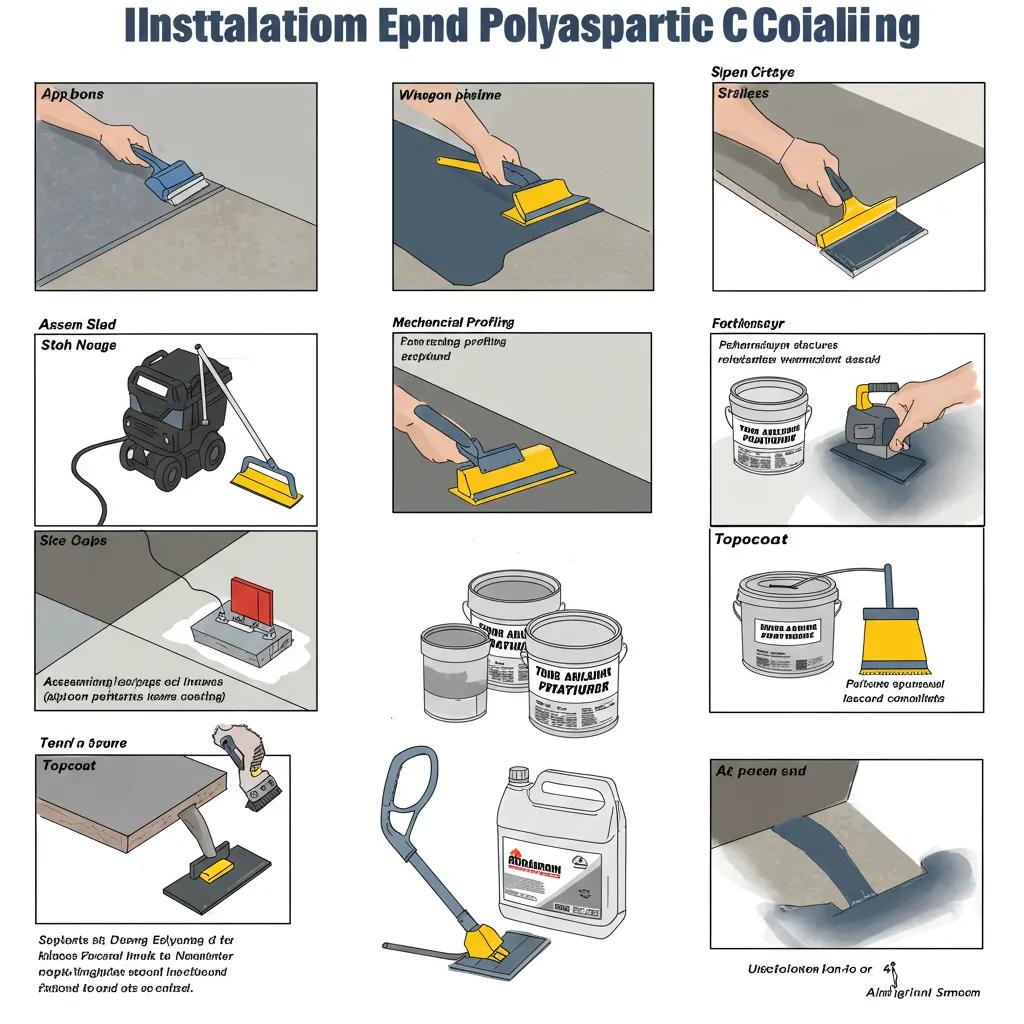
Professional installation typically follows a structured sequence: assess and test slab moisture, mechanically profile the concrete (diamond grinding or shot blasting), repair cracks and spalls, apply primer if required, install basecoat and decorative elements such as flake broadcast, and finish with a clear topcoat and inspection. For epoxy systems this sequence includes longer cure times between steps to ensure cross-linking, while polyaspartic workflows emphasize speed and timing control due to short pot life. A final inspection and client walkthrough confirm adhesion, finish quality, and maintenance guidance.
Installation follows a clear sequence for quality outcomes:
- Assessment and testing: Evaluate moisture, flatness, and cracks to plan repairs.
- Mechanical profiling: Grind or blast the slab to create adhesion profile.
- Repair and priming: Fill cracks and apply primer to enhance bonding.
- Coating application and topcoat: Apply basecoat, decorative broadcast if used, and finish with a UV-stable topcoat.
These steps ensure a durable finish and reduce the risk of premature failure; the summary emphasizes that quality installation drives long-term value.
What Financing Options Make High-Quality Coatings Affordable?
Financing can lower barriers to choosing higher-performance systems such as polyaspartic by spreading cost over time; available financing options include plans that may be under $30 per month for qualifying projects as reported in local service listings. Prospective customers are encouraged to request a quote and discuss eligibility for financing to understand monthly payment estimates and how financing can enable selection of long-lasting coatings. Financing can convert a capital-heavy decision into an affordable monthly investment, aligning long-term durability goals with household budgets.
What Are the Most Frequently Asked Questions About Epoxy and Polyaspartic Concrete Coatings?
This FAQ-style section answers common purchase and performance questions concisely to help readers get quick, actionable guidance for making coating decisions. Short, direct answers are optimized for decision support and include numeric ranges and practical caveats to assist in planning and contractor conversations. The responses below address common concerns buyers raise when comparing epoxy and polyaspartic systems.
Is Polyaspartic Better Than Epoxy for Garage Floors?
Polyaspartic can be better when you need fast cure, UV stability, and flexibility; epoxy can be better for lower upfront cost and very hard surfaces in indoor, low-UV environments. The “better” choice depends on project constraints: choose polyaspartic for quick turnaround and outdoor color retention, or epoxy where decorative budgets and indoor hardness are primary concerns. Consider slab condition, exposure, and installer skill when deciding which system is best for your specific garage.
How Long Do Epoxy and Polyaspartic Coatings Last?
Typical lifespans vary with traffic, maintenance, and installation quality; epoxy floors often last many years in residential settings when properly applied and maintained, while polyaspartic systems can offer comparable or longer service life under UV exposure and high-traffic conditions. Regular cleaning, prompt repairs of chips, and protection from harsh chemicals extend both systems’ functional life, and professional installation with correct surface prep maximizes longevity.
What Are the Disadvantages of Polyaspartic Flooring?
The main disadvantages of polyaspartic flooring are higher initial material and labor costs and a short pot life that requires experienced installers and careful scheduling. Rapid curing also leaves less margin for correction during application, increasing reliance on skilled crews to achieve seamless finishes. Despite these challenges, the reduced downtime and superior UV resistance often offset the drawbacks for many applications.
How Does Cost Affect the Choice Between Epoxy and Polyaspartic?
Cost affects the balance between upfront budget and long-term value; epoxy’s lower initial cost makes decorative flake systems accessible, while polyaspartic’s higher cost can be justified by faster return-to-service, better UV stability, and potentially lower maintenance expenses. Financing options can shift the calculus by enabling higher-performance selections, so obtain detailed quotes that factor in prep work, thickness, and warranty to compare true cost of ownership.
Can You Customize the Appearance of Both Coatings?
Both epoxy and polyaspartic support a range of decorative options, including broadcast flakes, quartz, and metallic finishes, though the finish character and long-term color retention differ between systems. Epoxy flake systems are popular for cost-effective decorative coverage, while polyaspartic topcoats preserve color and metallic effects with superior UV stability. Professional installers can recommend decorative approaches that match aesthetic goals and performance requirements.
Garage Floor Coatings can help you evaluate these options, provide tailored recommendations for Rhode Island and Massachusetts projects, and discuss financing to make higher-value coatings accessible; request a free on-site estimate or consult the company’s Google Business Profile for local reviews and contact options to get started.