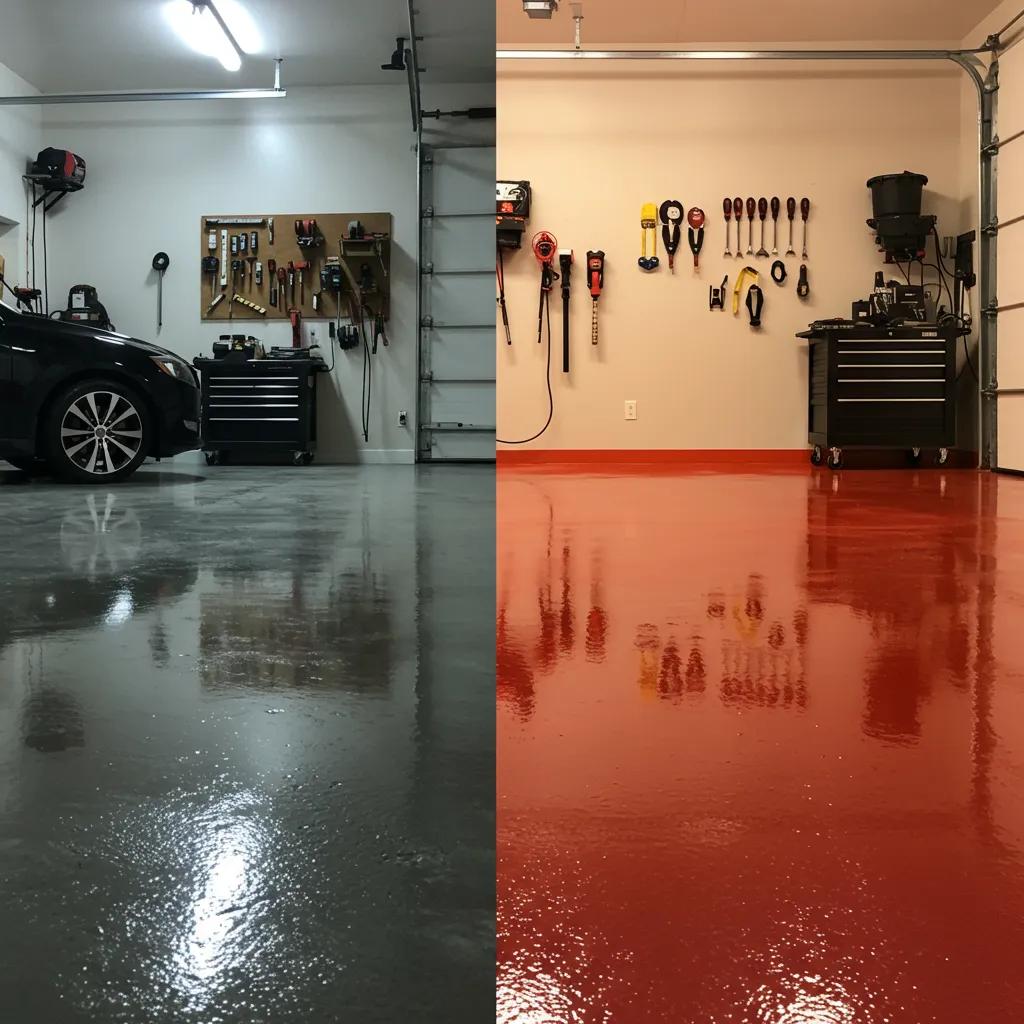
Epoxy vs Polyaspartic Garage Floors — What’s Best for Rhode Island Homes?
Rhode Island homeowners deciding between epoxy and polyaspartic garage floors need clear, local guidance that accounts for cold winters, coastal humidity, and occasional sun exposure. This article explains what each coating is, how they work chemically, and which performance attributes matter most for Rhode Island homes so readers can match product features to real-world needs. You will learn the strengths and limitations of epoxy and polyaspartic systems, side-by-side comparisons for durability, UV and chemical resistance, typical cost ranges and installation timelines, and practical maintenance advice tailored to Rhode Island’s climate. The goal is to help you choose the right coating for your budget, traffic level, and aesthetic goals while highlighting professional installation steps that safeguard warranties and long-term performance. Below we cover: epoxy basics and trade-offs; polyaspartic advantages and considerations; a detailed comparison table; how RI weather affects choice; homeowner decision scenarios; the professional installation process; and a concise FAQ that answers common cost, lifespan, and financing questions.
What Are Epoxy Garage Floor Coatings and Their Benefits for Rhode Island Homes?
Epoxy floor coatings are two-part resin systems composed of a polymer resin and a hardener that chemically react to form a hard, bonded layer over prepared concrete, delivering strong adhesion and a durable finish. This chemical crosslinking creates a dense surface that resists many household chemicals and provides a smooth, attractive base for decorative flakes or metallic effects. Epoxy is often chosen for homeowners wanting lower upfront cost with good adhesion and design flexibility, especially for interior garages with limited direct sunlight exposure. The next subsections explain epoxy chemistry, key advantages for RI garages, and common limitations to weigh when planning installation.
What Is Epoxy Floor Coating and How Does It Work?
Epoxy floor coating is a thermoset polymer system where a resin combines with a catalyst to form a rigid, cross-linked network that adheres to concrete when the substrate is properly prepared. The system typically includes a primer, a base epoxy layer, and an optional topcoat; the primer improves bond by penetrating surface pores while the base provides most of the mechanical strength. Proper surface preparation—diamond grinding or shot blasting and moisture testing—ensures the epoxy physically and chemically bonds to the slab. Understanding this layered structure clarifies why prep and environmental control during cure are essential to avoid failures.
Superior Properties and Applications of Epoxy Resins in Coatings
Epoxy resins are usually more expensive than their rivals, such as phenolic resins for coatings or laminates. Therefore, epoxy resins find application because of their superior properties, which include both processing and those of the cured resin. The processing is convenient since it is possible to formulate compositions with the required rheological properties, such as low viscosity, and there is also a wide choice of hardeners so that it is possible to cure at ambient as well as elevated temperatures. Because epoxy resins can be cross-linked without the formation of low molecular weight products, volatiles are not evolved during cure, and the resins have only a relatively low shrinkage during curing. Their mechanical and electrical properties are superior to other resins and they have good heat and chemical resistance.
Preparation and characterization of polyaspartic and a high solids acrylic copolymer polyol based polyurethanes, C Dızman, 2023
What Are the Key Advantages of Epoxy for RI Garages?
Epoxy offers several homeowner-friendly benefits: comparatively lower material and installation cost, excellent adhesion to well-prepared concrete, and wide decorative flexibility for flakes and metallic finishes that enhance curb appeal. Its chemical resistance to gasoline, oils, and common solvents makes it practical for typical garage use where spills occur, and epoxy’s smooth finish simplifies cleaning. For homeowners prioritizing design customization on a tighter budget, epoxy is a compelling option provided the garage has limited UV exposure. These advantages point toward epoxy as a strong value choice for many Rhode Island residences.
What Are the Limitations of Epoxy Coatings in Rhode Island?
Epoxy’s primary limitations include longer cure and downtime, susceptibility to UV yellowing in sun-exposed garages, and sensitivity to moisture during the curing window, which can cause blisters or adhesion loss. In Rhode Island’s coastal zones and during winter months, elevated slab moisture or rapid temperature swings increase the risk of epoxy-related failures if moisture testing and mitigation are skipped. Epoxy also tends to be more rigid than alternative formulations, making it more vulnerable to hairline cracking under significant freeze-thaw stress. Knowing these constraints helps homeowners plan installation times and protective topcoats.
How Do Polyaspartic Garage Floor Coatings Benefit Rhode Island Homeowners?
Polyaspartic coatings are aliphatic polyurea derivatives designed for rapid chemical cure, UV stability, and greater flexibility, delivering an option that minimizes downtime while resisting yellowing and environmental stressors. These coatings cure rapidly to a walk-on state and tolerate wider temperature and humidity ranges during installation, making them well-suited for Rhode Island scheduling challenges. Polyaspartic’s abrasion and chemical resistance also support long service life and—according to local supplier reporting—may come with extended warranty terms that reflect expected longevity. The subsections below describe polyaspartic chemistry, climate advantages for RI, and trade-offs to consider.
What Is Polyaspartic Floor Coating and Its Main Features?
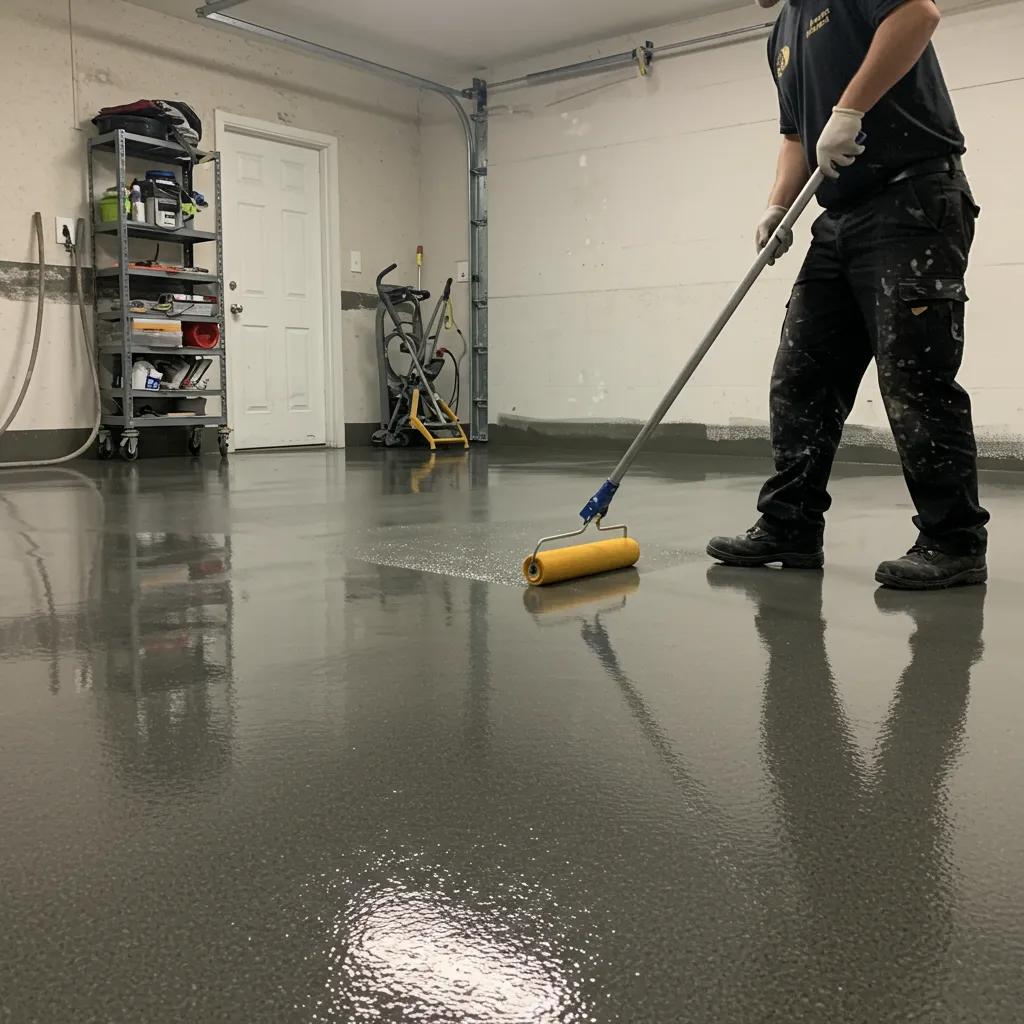
Polyaspartic coatings are fast-curing, two-component aliphatic coatings that form a flexible, UV-stable film with very high abrasion and chemical resistance compared with many standard epoxies. The rapid polymerization shortens pot life and requires skilled application, but it also enables same-day walkability and minimal homeowner disruption. Typical features include excellent resistance to UV discoloration, strong bond when applied over proper substrate preparation, and compatibility with decorative flakes or broadcast aggregates. These features make polyaspartic a practical premium option for homeowners seeking fast turnaround and reduced yellowing risk.
Polyaspartic Hybrid Coatings: Enhancing Durability and Application
The polyaspartic-polyol mixtures reacted with polyisocyanates to create hybrid polyurethane-polyaspartic hybrid coatings. Different amounts of synthesized acrylic copolymer (5, 10, and 20% of total resin mixture) were mixed into polyaspartic resin and subsequently reacted with polyisocyanates in a 1:1 molar ratio. The characterization of the polymer was performed with Gel Permeation Chromatography (GPC), Fourier-Transform Infrared-Attenuated Total Reflection (FTIR-ATR) and Differential Scanning Calorimetry (DSC). The determination of physical and mechanical properties of the hybrid coatings was accomplished by hardness, glossiness, abrasion, stress-strain, corrosion, and impact tests. The results indicated that by adding high solids acrylic copolymer (HSAC), the drawbacks of polyaspartic resin (short pot life, hardness and brittleness, and poor adhesiveness) have been largely eliminated without reducing its intrinsic properties. The pot life increased from 16 minutes to 27 minutes and shore D hardness decreased from 60-65 to 52-55 as the polyol content increased in the mixtures. The acrylic polyols and aspartic mixtures may be used in the preparation of paints and varnishes applied on concrete, metal, and wood surfaces.
Preparation and characterization of polyaspartic and a high solids acrylic copolymer polyol based polyurethanes, C Dızman, 2023
Why Is Polyaspartic Ideal for Rhode Island’s Climate?
Polyaspartic systems handle Rhode Island’s mix of sun, humidity, and freeze-thaw cycles better because of their UV stability and relative flexibility, which reduces yellowing and cracking under thermal stress. The fast cure also reduces the window for moisture-related failures, making scheduling less vulnerable to brief wet spells or humid conditions common in coastal areas. For sun-exposed or exterior transitional garages, polyaspartic’s aliphatic chemistry minimizes yellowing that epoxy might suffer without a UV topcoat. These seasonal and exposure advantages explain why many local homeowners prefer polyaspartic for durability in the RI climate.
What Are the Drawbacks of Polyaspartic Coatings for RI Homes?
Higher material and installation costs, plus a need for experienced installers due to fast pot-life and precise equipment needs, are the main drawbacks of polyaspartic systems. Some decorative effects available for epoxy may be more expensive or require special sequencing when executed with polyaspartic formulas. While warranties and long-term durability can offset upfront expense, homeowners must weigh short-term cost against reduced downtime and longer life. Knowing the contractor’s experience and warranty terms helps balance these trade-offs.
How Do Epoxy and Polyaspartic Garage Floors Compare: Durability, Cost, and Performance in Rhode Island?
A concise comparison helps homeowners choose based on durability, UV and chemical resistance, cure time, and cost implications relevant to Rhode Island conditions. Below is a clear EAV-style comparison table that summarizes core attributes and practical values so readers can scan key differences quickly before diving into each comparison subsection. After the table, short narrative and lists explain the implications for typical RI garages.
Different coatings deliver distinct performance profiles that matter in practice.
| Coating Type | Characteristic | Typical Rhode Island Value |
|---|---|---|
| Polyaspartic | Curing time | 2–6 hours to walk-on; full cure in 24–48 hours |
| Polyaspartic | UV stability | High — minimal yellowing in sun-exposed garages |
| Polyaspartic | Warranty | Often up to 20 years (supplier-reported) |
| Epoxy | Curing time | 24–72 hours to walk-on; 7 days for full cure in some mixes |
| Epoxy | UV stability | Lower — may yellow without UV topcoat |
| Epoxy | Cost | Typically lower upfront material and installation cost |
This table highlights how polyaspartic favors fast cures and UV resistance, while epoxy offers lower immediate cost and extensive decorative options.
Key practical differences follow in short lists and paragraphs to guide selection:
1. Core performance differences:
- Durability: Polyaspartic generally offers higher abrasion resistance under heavy traffic.
- UV behavior: Polyaspartic resists yellowing; epoxy often needs a UV-stable topcoat.
- Cure and downtime: Polyaspartic enables same-day use; epoxy requires longer cure time.
2. Cost and value considerations:
- Upfront cost: Epoxy typically costs less per square foot.
- Lifetime cost: Polyaspartic can deliver lower total ownership cost due to longevity and less maintenance.
- Price drivers: Surface prep, moisture mitigation, decorative options, and warranty levels.
These points show that homeowners must balance immediate budget against long-term resilience for RI conditions.
What Are the Differences in Durability and Longevity?
Durability differences stem from material chemistry: polyaspartic’s molecular structure affords higher abrasion resistance and flexibility, which together yield longer practical lifespans under variable temperatures and coastal humidity. Epoxy can perform well for many years in interior, low-UV garages, but it typically shows wear sooner under heavy vehicle traffic or where deicing salts are tracked in. Warranty offerings and installation quality heavily influence real-world longevity, so selecting experienced installers and proper prep is essential to reach expected lifespan. These durability contrasts tie directly into the next topic, UV and chemical resistance comparisons.
How Do UV Resistance and Chemical Resistance Compare?
Polyaspartic coatings exhibit superior UV stability due to aliphatic chemistries, meaning less yellowing and longer consistent finish on sunlit garage floors, whereas standard epoxy (especially aromatic epoxy) can yellow without a UV topcoat. In terms of chemical resistance to gasoline, oil, and road salt, both systems can be formulated to resist common garage contaminants, but polyaspartic often provides a slight edge in long-term resistance to staining and abrasion from salt and grit. For exterior-facing or partially open garages in RI, UV-stable polyaspartic or an epoxy with a UV topcoat is recommended to preserve aesthetics and function.
What Are the Cost Differences for Rhode Island Homeowners?
Typical baseline ranges depend on surface condition, square footage, and finish choices, with epoxy usually presenting the lower upfront per-square-foot price and polyaspartic commanding a premium for material and installation labor. Cost drivers include concrete repair, moisture mitigation, decorative broadcast or metallic finishes, and warranty level; extensive prep or repairs raise either coating’s price materially. Financing options can make premium systems accessible, and some local providers advertise monthly plans that reduce immediate cost impact. Homeowners should request site-specific quotes to account for slab condition and desired finish.
How Do Cure Times and Installation Processes Differ?
Cure-time differences are a major practical consideration: polyaspartic can often be applied and opened to light use in a single day, drastically reducing household disruption, while epoxy systems typically require longer cure windows that can extend over multiple days. Application differences include working pot life—polyaspartic’s short pot life requires a tight crew and environment control, while epoxy allows longer working time for decorative flake broadcast and trowel work. For many Rhode Island homeowners, the reduced downtime offered by polyaspartic is a decisive benefit, particularly for rental properties or busy households.
What Are the Maintenance Requirements for Each Coating?
Both systems require routine cleaning and spill management to maximize lifespan, but polyaspartic’s faster restoration and higher abrasion resistance mean less frequent professional touch-ups for heavy-use garages. Recommended maintenance includes gentle detergent washing, prompt removal of harsh chemical spills, and annual inspection for chips or seam failures; abrasive or solvent cleaners should be avoided for both coatings. Scheduling professional inspections every few years preserves warranty eligibility and catches small repairs before they grow. Good maintenance practices lower long-term costs and improve return on investment.
How Does Rhode Island’s Climate Affect Garage Floor Coating Choices?
Rhode Island’s climate—cold winters, occasional hot summers, coastal humidity, and road salt exposure—creates stressors that influence coating selection, installation timing, and maintenance strategies. Coating attributes that matter most locally include UV stability, flexibility for thermal movement, moisture tolerance during cure, and chemical resistance to deicing salts. The following EAV-style table maps coating attributes to RI impacts so homeowners can see which properties mitigate which local risks.
Coating attributes determine performance in local weather.
| Coating Attribute | Rhode Island Impact | Practical Recommendation |
|---|---|---|
| UV Stability | Sun-exposed areas resist yellowing | Choose polyaspartic or UV topcoat |
| Flexibility | Reduces cracking from freeze-thaw | Prefer flexible polyaspartic formulations |
| Moisture Tolerance | Prevents adhesion failures during damp seasons | Require moisture testing and mitigation |
| Salt Resistance | Prevents corrosion and surface breakdown | Select chemically resistant topcoats |
How Do Cold Winters and Temperature Swings Impact Coating Durability?
Cold temperatures and thermal cycling place stress on rigid coatings, making flexibility a desirable attribute to resist microcracking from slab contraction and expansion. Polyaspartic’s relative flexibility reduces the likelihood of stress fractures during freeze-thaw cycles, while more rigid epoxies can develop hairline cracking if not matched with proper joint detailing and substrate preparation. Properly addressing slab movement, using appropriate expansion joint treatment, and selecting a coating chemistry with some flexibility mitigates these risks. Implementing these measures during installation helps the coating endure RI winters.
What Role Does Humidity and Road Salt Play in Floor Coating Selection?
High humidity during spring and fall, along with road salt tracked indoors in winter, increases the need for moisture testing and chemical resistance in coating selection. Moisture vapor emissions from concrete can prevent epoxy from curing properly unless mitigated; polyaspartic’s faster cure lessens but does not eliminate the need for testing. Road salt is corrosive to unfinished concrete and can abrade coatings, so selecting salt-resistant formulations and scheduling maintenance after winter months helps preserve floor integrity. Testing and timing installations around dry windows reduces failure risk.
Which Coating Offers Better UV Protection for Rhode Island Homes?
For sunlit or partially open garages, polyaspartic clearly offers superior UV stability and color retention, reducing the need for additional protective topcoats that epoxy often requires. When epoxy is chosen for aesthetic reasons, adding a UV-stable clear topcoat mitigates yellowing but increases cost and labor. Deciding between a UV-stable base material or an epoxy-plus-topcoat approach depends on budget, desired finish, and exposure level. This UV consideration ties into homeowner decision scenarios covered next.
What Should Rhode Island Homeowners Consider When Choosing Between Epoxy and Polyaspartic?
Homeowners should weigh budget, traffic patterns, desired aesthetics, installation speed requirements, and warranty terms when choosing a coating, and match those priorities to product strengths. Scenario mapping helps translate real use cases into clear recommendations that consider Rhode Island’s environmental variables and homeowner lifestyles. Below is an EAV-style scenario table followed by practical lists that help homeowners pick the best fit.
Match real homeowner scenarios to recommended coatings.
| Scenario | Recommended Coating | Rationale |
|---|---|---|
| Budget-conscious homeowner | Epoxy | Lower upfront cost; good for low-UV interior garages |
| High-traffic/garage workshop | Polyaspartic | Better abrasion resistance and flexibility |
| Sun-exposed or exterior transitional garage | Polyaspartic | Superior UV stability and color retention |
| Fast turnaround needed (rental/home sale) | Polyaspartic | Often feasible as a one-day install |
How Does Budget Influence Your Garage Floor Coating Choice?
Budget affects the trade-off between upfront cost and lifetime value: epoxy typically has lower initial cost while polyaspartic has higher upfront expense but may reduce lifetime maintenance and recoat frequency. Cost drivers include surface preparation, moisture mitigation, decorative broadcasts, and warranty levels; decorative or metallic finishes add to either system’s cost. Financing options reported by local providers can make premium systems easier to afford through monthly plans, which shifts decision calculus for many homeowners. Evaluating lifetime cost rather than just initial price often favors polyaspartic for heavy-use garages.
What Are the Usage and Traffic Considerations for Your Garage?
Daily vehicle traffic, frequent heavy loads, or workshop activities increase the need for abrasion resistance and chemical resilience, pushing the recommendation toward polyaspartic systems in many cases. For garages used mainly for storage or infrequent parking, high-quality epoxy can provide good performance at a lower cost and allow richer decorative options. Slip resistance can be engineered into both systems via broadcast aggregates, so safety needs should be specified up front. Choosing the right system aligns the coating’s performance profile to real daily demands.
How Important Is Aesthetic Customization and Finish?
Epoxy systems traditionally offer the broadest and most cost-effective decorative options—flakes, chips, and metallics—making them ideal where design variety is the priority. Polyaspartic can also accept decorative treatments but some specialty effects may increase price or require specific sequencing, which raises installer skill requirements. Gloss level, metallic sheen, and flake density all affect maintenance and cost; homeowners should specify desired finish early so bids are comparable. Aesthetic priorities often determine whether a homeowner accepts a higher price for shorter downtime or chooses epoxy for its decorative economy.
When Is Fast Installation a Priority?
Fast installation is crucial for rental turnovers, busy households, or homeowners who cannot lose garage access for days; in those cases polyaspartic’s one-day or same-day walk-on capabilities often justify the premium. Minimizing downtime reduces household disruption and can speed resale preparation when selling a home. Scheduling in Rhode Island still requires weather-aware planning, but polyaspartic’s shorter cure windows provide greater flexibility around brief dry windows. If speed is the primary criterion, prioritize contractors experienced with rapid-cure systems.
After evaluating scenarios, homeowners who want local expertise and financing support may find value in regional providers that balance installation quality and cost. Garage Floor Coatings, based in Bristol, RI and serving Rhode Island and nearby Massachusetts towns such as Cumberland, RI and Bellingham, MA, emphasizes local climate knowledge, custom finishes, and financing that can make premium systems affordable. Their approach focuses on meticulous surface preparation, clear warranty handling, and options that align cost and use-case—useful when comparing quotes and scheduling.
What Is the Professional Installation Process for Epoxy and Polyaspartic Garage Floors in Rhode Island?
Professional installation follows a repeatable process: assess and test the slab, execute surface preparation (grinding or shot blasting), repair cracks and joints, apply primer/base and decorative layers, then seal and cure per manufacturer guidelines to secure warranty coverage. Each step reduces failure risk and contributes to long-term durability, particularly in Rhode Island where moisture and temperature swings complicate installation windows. The following subsections detail surface prep, application differences, and how professional work influences warranties and longevity.
How Is Surface Preparation Done for Durable Results?
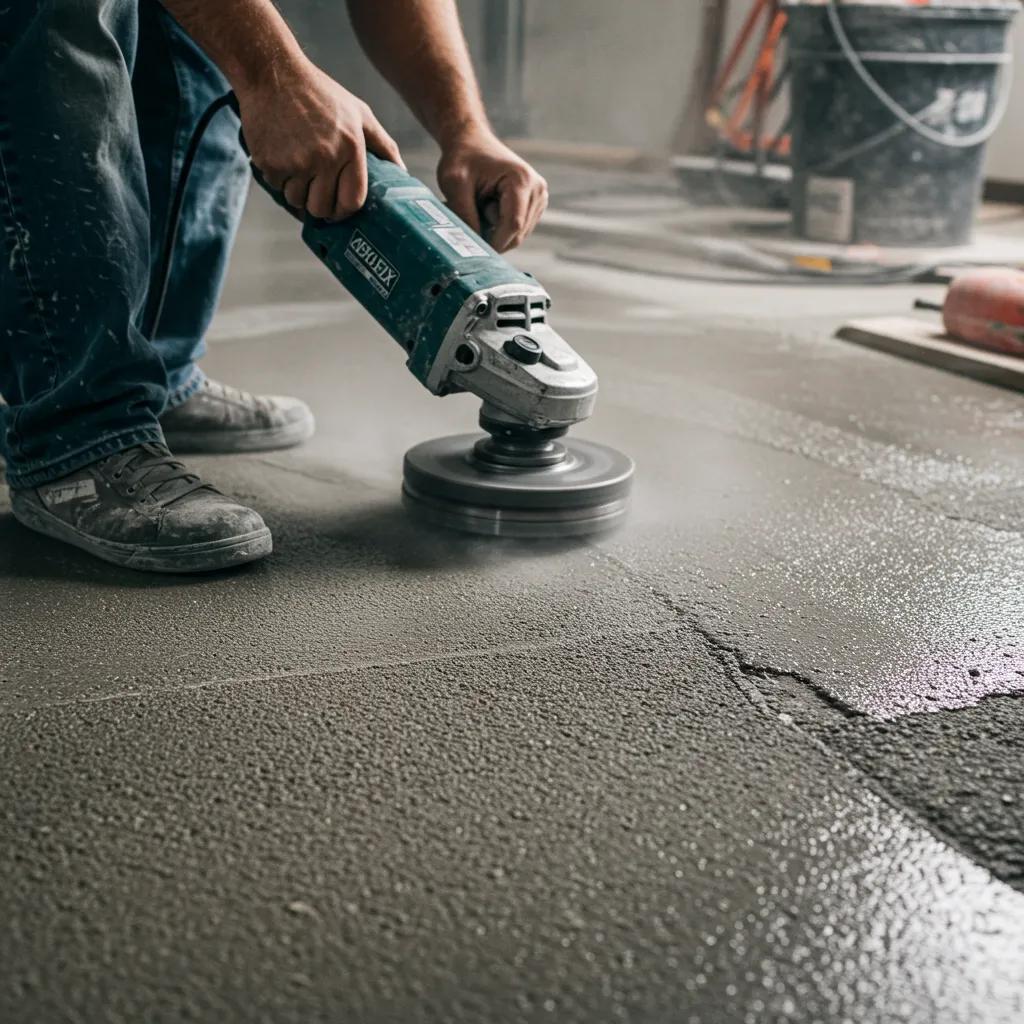
Surface preparation is the most critical phase and typically includes diamond grinding or shot blasting to remove laitance and open concrete pores, followed by moisture vapor testing and any necessary mitigation systems to address high emissions. Cracks and control joints are repaired, and the slab must be clean and structurally sound before coating; skipping steps here is the most common cause of failures. Proper prep creates a profile the coating can mechanically bond to and ensures manufacturer warranty conditions are met. Investing in diligent prep prevents costly rework and extends service life.
What Are the Key Differences in Application Between Epoxy and Polyaspartic?
Application differences center on working time, mixing, and environmental sensitivity: epoxy generally offers a longer pot life and more forgiving working time for decorative broadcasts, while polyaspartic cures quickly and requires an experienced crew to manage fast pot lives and consistent rollouts. Temperature and humidity windows matter for both, but polyaspartic tolerates a wider range during application and reduces the time slab is exposed to weather risk. Equipment needs and crew sequencing differ, so choosing contractors skilled in the specific system is essential to avoid common installation pitfalls.
How Does Professional Installation Affect Warranty and Longevity?
Warranty eligibility frequently depends on documented preparation and certified installation; manufacturers commonly require proof of moisture testing, prep techniques, and application conditions to honor extended warranties. Professional installers who follow documented processes and provide installation records help homeowners claim warranty coverage and realize published lifespan expectations. For example, certain polyaspartic systems are offered with long warranty terms when installed by certified professionals, which underscores the connection between installer quality and long-term value. Requesting documented prep and warranty terms should be part of any contractor selection.
Garage Floor Coatings emphasizes meticulous surface prep and documented processes, and their professional process is designed to protect warranty eligibility and reduce the chance of moisture- or preparation-related failures. They offer installations that align with local climate needs and can provide financing options to spread payment when homeowners prefer that route.
What Are the Most Frequently Asked Questions About Epoxy vs Polyaspartic Garage Floors in Rhode Island?
This FAQ section answers common buyer questions concisely to help Rhode Island homeowners evaluate lifespan, cost, financing, and maintenance for both systems, drawing on local considerations.
Is Polyaspartic Better Than Epoxy for Rhode Island Garages?
Polyaspartic often outperforms epoxy for Rhode Island garages exposed to sun, humidity, and freeze-thaw cycles because of superior UV stability, faster cure, and better flexibility; however, epoxy remains a cost-effective choice for interior garages with low UV exposure and where decorative finish variety is a priority. The best choice depends on exposure, traffic, and budget rather than a one-size-fits-all answer.
How Long Does a 1-Day Polyaspartic Garage Floor Coating Last in Rhode Island?
A properly installed polyaspartic floor can last 15–20 years or more under typical residential conditions, with longevity depending on substrate preparation, traffic, and maintenance; warranties offered by some suppliers reflect long expected lifespans for correctly applied systems. Installation quality and routine care are key determinants of actual lifespan.
What Is the Average Cost of Epoxy vs Polyaspartic Garage Floor Coatings in RI?
Average local cost ranges vary with slab condition and finishes, with epoxy generally lower per square foot and polyaspartic higher due to materials and installation skill; major cost drivers include prep, repair, decorative options, and warranty. Obtain site-specific quotes to account for slab repairs and chosen finish, as these variables often outweigh base material costs.
Can I Finance My Garage Floor Coating Project in Rhode Island?
Financing is available from some local providers and can reduce monthly payments to accessible amounts—examples from regional services indicate options that can bring a project cost down to affordable monthly payments. Ask your contractor about financing plans and terms to determine which options suit your budget.
How Do I Maintain My Garage Floor Coating for Maximum Longevity?
Maintain coatings with regular sweeping and periodic gentle washing using mild detergents, promptly clean automotive fluids and salt residues, avoid harsh solvents, and schedule professional inspections every few years to address minor chips or seam issues before they worsen. Routine preventive care significantly extends service life and preserves warranty eligibility.
1. Common maintenance tasks:
- Sweep regularly to remove grit and salt.
- Wash periodically with a mild detergent and soft broom.
- Address spills promptly to prevent staining and chemical damage.
These steps help maximize lifespan and protect warranty coverage.